Sunday, 4 May 2014

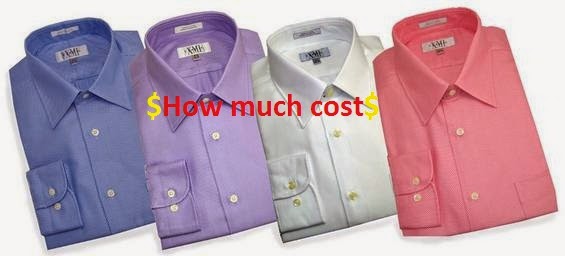
Cost Analysis of Garments | Factors of Costing of a Garment

Cost Analysis of Garments
Noor Ahmed Raaz
B.Sc. in Apparel Manufacturing
Asst. Merchandiser
Opex Sinha Group, Narayongonj
Email: raju.uttara72@yahoo.com


Cost Analysis:
Costing of garment is a very important task for a garment factory which runs for business purposes. Costing of the garments considering the raw materials expenditure, salary and wages of officers and workers, distributions and advertisement expenses etc. all direct and indirect expenses is done in this factory. It is determined by a troop of accountants with advice and consultancy of executive director.
Garments costing
Factors of Costing of a Garment:
The following factors are considered for costing any dyed product.
  1. Total dyes and chemical cost.
  2. Total utility cost
  3. Salary
  4. Lunch
  5. Entertainment cost
  6. Government cash incentive
  7. Yarn cost
  8. Knitting cost
  9. Cost of dyeing
  10. Cost of finishing
  11. Cost of cutting ,sewing, accessories etc
  12. Cost of printing (If any)
  13. Cost of cutting, sewing, cartooning etc.
  14. Labor cost (direct & indirect)
  15. Factory cost
  16. Sales and caring cost
Price of the Product:
Generally price of product is determined by the required profit adding to the total expenses. So,

Price of products= (Direct expenses + Indirect expenses + Factory Overhead) + Required profit

Conclusion:
The costing of the product is a secret matter of the Ind. They are not interested to flash up the cost related data. So we could not collect the price of product & costing of the product

What is Biopolishing of Textiles? | Process of Bio-polishing in Textile

An Overview of Bio-polishing in Textile
Sabina Yesmin Rony
Dept. of Textile Engineering
Dhaka University of Engineering & Technology (DUET)
Email: sabina.yesmin.520@facebook.com


What is Bio-polishing:
Bio-polishing is a finishing process that enhances fabric quality by decreasing the pilling tendency and fuzziness of (cellulose) knitted fabrics .This finishing process applied to cellulose textiles that produces permanent effects by the use of enzymes .This process removes protruding fibres & slubs from knitted fabrics, significantly reduces pilling, softens fabric hand and provides a smooth fabric appearance .
Bio-polished garment
About the Bio-polishing :
The bio-polishing process targets the removal of the small fiber ends protruding from the yarn surface and thereby reduces the hairiness or fuzz of the fabrics. The hydrolysis action of the enzyme weakens the protruding fibers to the extent that a small physical abrasion force is sufficient to break and remove them. Bio polishing can be accomplished at any time during wet processing but is most convenient performed after bleaching.

It can be done in both continuous or batch processes. However, continuous processes require some incubation time for enzymatic degradation to take place. Removing the fuzz makes the color brighter, the fabric texture more obvious, and reduces pilling. Unfortunately, the treatment also reduces the fabric strength. Smoother yarns also increase the fabric softness, appearance and feel. Since it is an additional process, the bio-polished garments may cost slightly more. Next time you buy apparel, look for the label “Bio-Polished.

Object of Bio-Polishing :
  1. To removes protruding fibres & slubs
  2. To removes Hairiness, fluffs and pills .
  3. To Prevented material sticking .
  4. To softens fabric hand & improved handle .
  5. To achievement of surface smoothness and a clear structural appearance & improved luster .
  6. To imporved material texture relaxation & increased flexibility.
  7. To improved sewability & Fast to washing, low pilling tendency, no napping in use, or during care operation.
  8. To Converted fabrics from Poor quality, uneven, napped, knoppy material surface to lustrous, soft, elegant,top quality with a fine, high quality surface appearance.
Process of Bio-polishing :
There are two process of Bio-polishing .
  1. Dyeing followed by bio-polishing.
  2. Bio-polishing before Dyeing .
Process sequence of Dyeing followed by bio-polishing :

Scoured &bleaching sample

Dye addition

Salt addition

Soda ash addition

Dyeing

Hot wash

Hot wash

Soaping (at boil temperature )

Hot Wash

Cold wash

Enzyme treatment

Cold wash

Drying


Process sequence of Bio-polishing before Dyeing :

Scoured & bleaching sample

Bio-polishing

Cold wash

Drying

Dye addition

Salt addition

Soda ash addition

Hot wash

Hot wash

Soaping (at boil temperature )

Hot Wash

Cold wash

Drying


Process Variables :
To achieve optimum bio-polishing, the process variables have been varied as mentioned below ……
  • Concentration : Concentration of enzyme: 0.5%, 1%, 2%, 2.5%, 3% & 4%.
  • Temperature : Temperatures are 40 0C, 45 0C, 50 0C, 55 0C & 60 0C.
  • pH : 3 - 4, 4 - 5 & 5 - 6.
  • M : L : 1:5, 1:10, 1:15 & 1:20.
  • Mechanical Agitation: Vigorous Stirring, Medium Stirring & Without Stirring.
Standard Recipe for Bio-polishing :
  • Concentration of Enzyme = 3%
  • M : L = 1:10 
  • Temperature = 55 0C
  • Time = 55 minutes
  • pH = 4 - 5
Application Method :
Enzymatic cellulose degradation is also possible during reactive dyeing. Here the dyeing process as well as bio-polishing will be affected. We can applied this process Number of washes, time, cost and energy can be saved by this one bath method. However, it should be noted that there is some reduction in colour yield of reactive dyeing. This is because reactive dyeing is carried out in acidic pH during bio-polishing. But precaution is taken during addition of soda-ash as reactive dyes require alkaline condition for its fixation. The fabric is made neutral before adding soda-ash. It is found that neutral stable enzymes are more suitable in this type of one bath treatment.

Advantages & Disadvantages :
  1. Depth of shade increases when enzyme treatment is given before dyeing but the depth decreases when enzyme treatment is given after dyeing.
  2. Wash fastness of the enzyme treated sample after dyeing is good but Wash fastness of the enzyme treated sample before dyeing is very poo .
  3. One bath application saves energy, time & cost but the bio-polishing effect is not as good as the two bath method .
  4. Decreases the Pilling tendency .
  5. Loss in weight.
  6. Loss in strength.
Conclusion :
With the advantages of Bio-polishing there have some disadvantage of this process . So ,we have need to handle the process with carefully by controlling Concentration ,Temperature ,pH , M:L , & Time .

Saturday, 3 May 2014

Major Classifications/Branches of Technical Textiles

Major Classifications/Branches of Technical Textiles
Authors: Taha Bin Yahya
Maaz Wasim Khan
Akram Ali
National Textile University, Faisalabad, Pakistan
Email: tahabinyahya@gmail.com


Technical Textiles:
Technical Textiles are usually considered as those produced from specific materials by specific processes. This is true to some sense but not always. All those fabrics, which have any technical use, i.e. other than aesthetic appeal and body covering, are considered Technical Fabrics, despite of their raw material or manufacturing process. Technical Textiles are known by their end uses. They are usually, but not always, manufactured by special materials on special machines. You can also read of the above authors article about "Application of Technical Textiles."

Major Classifications of  Technical Textiles:
Technical Textiles are generally classified as:
  1. Mobiltech
  2. › Indutech
  3. Medtech
  4. Hometech
  5. › Clothtech
  6. Agrotech
  7. › Buildtech
  8. Packtech
  9. Sporttech
  10. Geotech
  11. › Protech
  12. › Oekotech
Some of the common examples of Technical Textile products are:
 
Transport textiles (MobilTech)
These textiles are used in the manufacture of automobiles and aircraft. Carbon composites are mostly used in the manufacture of aeroplane parts while carbon fiber is used for making higher end tyres. Nylon gives strength and its bursting strength being high is used as air bags in cars. High tensile polyester is used for making air balloons. Its applications are
Transportation textile
  • ›Tyre
  • ›Belt
  • ›Hose reinforcement
  • ›Safety belts
  • ›Air bags
  • ›Composite reinforcements
o Automotive bodies
o Civil and military aircraft
  • Bodies
  • Wings
  • Engine components
  • ›Many other uses.
Industrial products and components (INDUTECH)
Textiles used directly in industrial processes or incorporated into industrial products. Textiles used for chemical and electrical applications and textiles related to mechanical engineering. Silk-screen printing, filtration, plasma screens, propulsion technology, lifting/conveying equipment, sound-proofing elements, melting processes, roller covers, grinding technology, insulations, seals & gaskets, fuel cell, Conveyor & Abrasive belts, Reinforcements for printed circuit boards etc.
Industrial textile
 Medical and hygiene textiles (MEDTECH)
These are commonly used in bandages and sutures (stitching the wounds). Not all the textile fibers can be used here, because their performances depend upon interaction with the cells and different fluids produced by the body. Sutures and wound dressings use fibers like silk and other synthetic fibers. Hollow synthetic fibers are used with nano or very small particles and are used for the delivery of drugs to any specific part of the body to prevent over dosage. Cotton, silk polyester, polyamide are also used in medical applications.
Medical Textile
Medical textiles also cover surgical gowns and drapes. There are two classes of materials: reusables and non-woven. Reusables are either PES or PES-cotton woven materials or laminates. Also non-woven materials are used in the operating theater. High performance non-wovens are usually laminated with a plastic foil in order to provide for sufficient barrier properties to reduce wound infection. Other examples are
  • › Wipes
  • › Babies’ diapers (nappies)
  • › Adult sanitary and incontinence products
  • › Sterilisation packs
Home textiles (HOMETECH)
Textiles used in a domestic environment - interior decoration and furniture, carpeting, protection against the sun, cushion materials, fireproofing, floor and wall coverings, textile reinforced structures/fittings.
Home textiles
In the contract market such as for large area buildings, ships, caravans, busses, fire retardant materials are used. Fire retardant properties are obtained either through the use of inherent fire retardant fibers such as modacryl or through the application of a coating with fire retardant additives (bromide of phosphorus compounds). Other examples are
  • › Bedding
  • › Sleeping bags
  • › To replace foams in furniture
  • › Carpet and furniture backings
  • › Curtain header tapes
Clothing components (CLOTHTECH)
Technical textiles for clothing applications especially in the finishing process where fabric is treated under pressure and high temperature the technical textile supports the fabric for smooth processing. This is usually the blend of polyester. Also
Clothtech
  • › Sewing threads
  • › Interlinings
  • › Waddings
  • › Insulation
Agriculture, horticulture and fishing (AGROTECH)
Textiles used in Agriculture are termed as agro textiles. They are used for crop protection, fertilization, etc. The essential properties required are strength, elongation, stiffness, and bio-degradation, resistance to sunlight and resistance to toxic environment. All these properties help with the growth and harvesting of crops and other foodstuffs. There is a growing interest in using materials which gradually degrade (biodegradables). Its products are
Agro textile
  • › Nets, ropes, lines
  • › Covering, protection
  • › Containment applications
  • › Drainage and land reclamation
  • › Protective clothing for employees
  • › Transport textiles for tractors and lorries
  • › Conveyor belts, hoses, filters
  • › Composite reinforcements
o Silos, tanks and piping
Construction - building and roofing (BUILDTECH)
Textiles used in construction - concrete reinforcement, façade foundation systems, interior construction, insulations, proofing materials, air conditioning, noise prevention, visual protection, protection against the sun, building safety.
Buildtech
An interesting and aesthetic appealing application is the use of textile membranes for roof construction. This area is also referred to as textile architecture. PVC coated high tenacity PES, teflon coated glass fiber fabrics or silicone coated PES are used for their low creep properties. Splendid examples of such construction are found in football stadia, airports and hotels.
  • › Construction of buildings, both permanent and temporary, dams, bridges, tunnels and roads.
  • › Tents, marquees and awnings.
  • › Architectural membrane
  • Semi-permanent structures
  • Sports stadia, exhibition centres
  • › Roofing applications
  • › Building and equipment insulation
  • › Wall panels, septic tanks and sanitary fittings
  • › Glass in bridges
Packaging and containment (PACKTECH)
Packtech includes several flexible packing material made of textile used for packing various goods for industrial, agricultural, consumer and other goods. It ranges from polymer based bags used for industrial packing to jute based sacks used for packaging food grains and packaging used for tea.
Packtech
  • Sacs
  • Fertiliser, sand, cement, sugar, flour to dyestuffs
  • › Wrapping and protection applications
  • › Tea and coffee bags
  • › Nonwoven insert
  • › Knitted net packaging
  • › Silos, containers
  • › Canvas covers, marquee tents.
Sport and leisure (SPORTTECH)
Sports textile is one of the branch of technical textile. Now a days sophisticated technology are used in technical textile to produce sports wear. Textile has done it successfully . Hi-tech textiles in sport are nothing new.
Sports textile
  • Shoes
  • › Artificial turf used in sports surfaces
  • › Advanced carbon fibre composites
  • Racquet frames, fishing rods, golf clubs and cycle frames
  • › Balloon fabrics, parachute and paraglider’s fabrics and sailcloth
Geotextiles in civil engineering (GEOTECH)
These are used in reinforcement of embankments or in constructional work. The fabrics in geo textiles are permeable fabrics and are used with soils having ability to separate, filter, protect or drain. The application areas include civil engineering, earth and road construction, dam engineering, soil sealing and in drainage systems. The fabric used in it must have good strength, durability, low moisture absorption and thickness. Mostly nonwoven and woven fabrics are used in it. Synthetic fibers like glass, polypropylene and acrylic fibers are used to prevent cracking of the concrete, plastic and other building materials. Polypropylene and polyester are used in geo textiles and dry/liquid filtration due to their compatibility. Some common examples are
Geotextile
  • › Geosynthetics
  • Geotextiles
  • Geogrids
  • Geomembranes
  • › Building of railway and road cuttings
  • › Embankments with steeper sides
Protective and safety clothing and textiles (PROTECH)
Protection against heat and radiation for fire fighter clothing, against molten metals for welders, for bullet proof jackets etc, all these things are obtained by usage of technical textiles with high performance fibers. In bullet proof jackets, special fiber aramid are used which have high tenacity, high thermal resistance and low shrinkage. Glass fiber is also used in fire proof jackets due to its high strength, chemical and flame resistance. Protective clothing is also used by the astronauts when they go in space. It was used by the astronauts when they went on moon, their suits where covered with special chemicals including lead to protect them from sun heat, their suit not only made from special fibers but their airship was also lined with special fabric. It provides protection against
Safety textile
  • › Cuts, abrasion, ballistic
  • › Stab wounds and explosions, fire & extreme heat
  • › Hazardous dust and particles
  • › Nuclear, biological and chemical hazards
  • › High voltages and static electricity
  • › Foul weather, extreme cold and poor visibility
  • › Instruments
Ecological protection textiles (OEKOTECH)
New applications for textiles in environmental protection applications - floor sealing, erosion protection, air cleaning, prevention of water pollution, water cleaning, waste treatment/recycling, depositing area construction, product extraction, domestic water sewerage plants.
Ecological protection textiles
  • › Filtration media
  • › Erosion protection
  • › Sealing of toxic waste
  • › Minimising water loss from the land
  • › Reducing the need for use of herbicides by providing mulch to plants
  • › Reducing weight in transport and construction 
 

An Overview of Licker-in (Taker-in) in Carding

An Overview of Licker-in (Taker-in) in Carding
Bhavdip Paldiya
Dept. of Textile Technology
Gujarat Technological University, Gujarat, India
Email: bhavdipk9009@gmail.com


Licker-in:

A roller on a carding machine, especially the roller that opens the stock as it is fed into the card and transfers the fibers to the main cylinder. Licker-in also known as Taker-in.
Taker-in
Basic Function of Licker-in:
  1. To open the cotton into very small tufts.
  2. To extract the seed bits, sand and other vegetable trash particles from cotton.
  3. To transfer the cotton into the cylinder surface and distribute the fibres as evenly as possible both transversely and longitudinally on the cylinder surface.
  4. The roller that receives fiber from the feedroll(s) is called the licker-in.
  5. The licker-in rotates upward as it takes fiber away from the feedrolls.
  6. If a card has a feedroll/feedplate feeding the licker-in, the licker-in rotates down to comb the fiber off the nose of the feedplate.
  7. As the fiber mixes in the card, the web coming out of the card will appear grey.
Better Function of Licker-in:
  1. Normally the setting between the feed plate and Lickr-in is around 0.45 to 0.7mm, depending upon the feed weight and fiber type.
  2. The setting between Licker-in and the first mote knife is around 0.35 to 0.5 mm. This helps to remove the heavier trash particles and dust. Closer the setting, higher the wastage.
  3. The setting between Licker-in and combing segments is around 0.45 to 0.6mm. This helps to open the material.
  4. Some cards have two mote knifes in the Licker-in under casing. The setting is around 0.4 to 0.5mm. This helps to remove the smaller trash and dust particles
  5. In order to maintain the licker-in area working with high performance, we recommend timely replacement of licker-in wire. Spinners benefit through better carding results (higher nep and trash removal, lower number of Classimat faults) as well as higher lifetime of cylinder and tops.
  6. Higher Licker-in speed for coarse fibers and dirty cotton helps to remove the trash and improves the yarn quality.
  7. The concept of using three licker-in place of one is basically for better cleaning of the feed material. Here the concept of clamped and unclamped feeding is used.
    Function of Licker-in
Pinned Licker-in:
  1. Also known as “Fibre Friendly”
  2. Stewart developed the Pinned Taker-In in 1972, and extended use since then has shown it to be fibre-friendly and extremely durable, making it an ideal match for TRUTSCHLER High Production Cards, where quality and output must be maximised and downtime minimized.
  3. Cotton has been traditionally carded using card wire. However, pins with their smooth pointed shape, do less damage to the fine fibres.
  4. The sharp, but smooth point of the pin gives excellent fibre penetration.
  5. The grain of the metal and the machining marks of the pin all run along the axis of the pin, so fibres can float freely around the point, and there are no traps to catch fibres or start wear.
  6. A reduction in fibre damage and improved waste extraction are usually found.
  7. This can recoup the cost of a Pinned Taker-In over its first year of three shift working
    Pinned wire                                                          Card wire

A close up view of a Stewart Taker-In which had run 3 shifts for 8 years in a mill in Germany. It was still running well after this demonstration of longevity, and was only removed for exhibition purposes

Efficiency of Pinned Taker-In Compared with Wire.
Efficiency is consistently high throughout the extended life of a Pinned Taker-In.
The efficiency of a wire Taker-In drops so rapidly that the wire must be replaced regularly.

Advantages of Pinned Taker-in:

1. Universal Pinning
A major advantage of the STEWART Pinned Taker-In is that one specification of pinning can be used to successfully card almost all fibres, so there is no need to change when running different fibres or blends.

2. Reduced Maintenance: Less Down time
Regular card down-time is saved because it is not necessary to rewire a Pinned Taker-In. This is particularly important for the Taker - In. which is usually rewired three times as often as the cylinder. The pins wear better because of their points, and they do not need sharpened or ground.

Grooved Wires by Reiter:
  1. Grooved licker ins are mostly used on (older) slower cards.
  2. The front angle is dictated by the application.
  3. Cotton is carded with 10° front angle (carded and OE applications) or with 5° (combed cotton mostly, using long and fine cotton fibres).
  4. For synthetics, we have grooved lickerin wire with 0° front angle.
  5. Grooved lickerins are available in several rib widths to suit particular cards.
  6. Grooved lickerins can be supplied in Super or Duratech steel.
  7. Duratech is our recommendation to achieve best performance and lifetime on grooved lickerins.
Interlocking Wires by Reiter:
  1. Interlocking can be used to convert worn out grooved lickerins.
  2. Modern, high-speed cards are using interlocking lickerins. The specification
  3. For interlocking licker in is in the most cases card specific, with the
  4. Full range being offered by Bekaert Carding Solutions. Interlocking licker in
  5. Wires are available in Super, Duratech and Ultra. We recommend
  6. The use of Ultra interlock licker in wires to achieve the best carding performances.
Licker-in by Bakaert:
  1. Most modern cards have stationary (or fixed) flats under the lickerin.
  2. Bekaert Carding Solutions offers the XLSA Fibre Saver system to mount in this
  3. Position on cards with 10 inch lickerin rollers.
  4. The XLSA-system is a workproven fixed flat system.
  5. Its function is to:
  • Subject the fibre tufts from the feed plate to intensive preopening and cleaning by the two stationary flats and the knives mounted in the XLSA system.
  • Ensure that trash is eliminated and that only a minimum of good fibre is taken out with the waste.
Benefits:
  1. Reduces good fiber loss under the lickerin.
  2. Increases the removal of trash and unwanted particles.
  3. Removes fibre chips and fused fibres from synthetic fibres.
  4. The DT-type fixed flats can be easily exchanged and set to keep the XLSA system in good operating condition.
  5. Pre-opening and cleaning mproves the lifetime ofylinder and top. 
 

Thursday, 1 May 2014

Application of Technical Textiles

Application of Technical Textiles
Authors: Taha Bin Yahya
Maaz Wasim Khan
Akram Ali
National Textile University, Faisalabad, Pakistan


Technical Textiles:
Technical and industrial textiles relate both to kinds of products and to the application of textiles to particular uses. Examples of technical textiles products are high tenacity yarns, or special elastic or coated fabrics, all of which have high technology content. As far as industrial applications are concerned, textile-based articles can offer considerable performance advantages compared to other materials.
Application of technical textiles in space
The sector of technical textile has experienced a spectacular increase during last years. Technical textiles consumption has increased worldwide by about >20% in volume. Cars and the transport industry, furniture, medical applications, clothing and construction are important users of technical and industrial textiles.

Given that innovation in new materials, processes and products is an inherent feature of this sub-sector, expenditure on research and development (R&D) is higher in this field than for conventional textiles (reaching up to 8-10% of turnover, compared to the industrial average of 3-5%). In the development of fibers, yarns and fabrics, functional aspects - such as anti-bacterial, anti-static, UV protective, thermal, or biodegradable functions - are playing an increasingly important role. Performance requirements and technical specifications determine the success of a product. Usually, technical textiles are created in a close relationship between the producer and the consumer so as to ensure tailor-made solutions to specific user purposes.

Application of Technical Textiles
SECTOR
EXAMPLES
MARKETS
Earthworks
Linings, netting, insulation, artificial grass (“geo-textiles”)
Construction companies for roads, water engineering, soil stabilization, tunnels and other earthworks
Construction
Insulation and roofing materials (“building textiles”)
Building firms, architects
Agriculture
Sun protection for greenhouses, fishing nets (“agro-textiles”)
Farming, horticulture and fishing
Transport
Car mats and lining, airbags, fire resistant seat covers and carpets, safety belts
Producers of cars, airplanes, boats
Medical and healthcare
Bandages, medical corsetry
(“medical textiles”)
Hospitals, nursing homes, households
Protection
Safety nets, ribbons and tapes, fire resistant clothing
(“protecting textiles”)
Industry, public procurement, households
Packaging
Twine and cordage, sacks and bags, tarpaulins (“packing textiles”)
Industry, distribution, households
Military and public services
Fire service equipment, bullet-proof jackets, army tents, parachutes, extinguishing blankets, tubes
Military/security, forestry, offshore oil industry
Specialized clothing
Sports, skiing and leisure
Active sports, mountaineering,  households
Communications
Optical fibers, image conductor cables
Communication sector
Industry
Filters, drive and conveyer belts, abrasive belts
Engineering, machinery, chemicals, plastics, mining, energy, etc.
Furnishing
Interlaid scrims, braiding, shower curtains, umbrellas, parasols, deck chairs, textile wall papers
Decoration firms, households