Monday, 12 May 2014

Types of Preventive Clothing and Their Uses or Applications Part-3

……Previous Part

Chainsaw Safety Clothing:
Chainsaw Safety Mitt or Mittens:
A leather mitt for the operator’s left hand that is fitted to (but is free to rotate on) the front bar of the chainsaw. The safety mitt ensures that if kick-back occur the operator’s hand remains on the bar of the chainsaw. This means that the kickback is more easily controlled and the chain brake is engaged. The safety mitt also protects the operator’s left hand in the same way as chainsaw safety gloves.

Special fabrics have been developed for chainsaw clothing, and this development is still very active. Conventional fabric is useless at protecting against a running chainsaw, being immediately cut through.

There is a real struggle between making a fabric proof against more violent impact, and making it light, flexible and comfortable enough for the user. Clothes which make the user too hot, or which prevent the user moving easily, are a safety problem in themselves. A worker suffering from heat exhaustion is not safe. Extra fabric layers can be added to clothing to improve cut resistance, but clothes which cannot be cut at all by a powerful saw are impractical, even with modern fibres. What is worse, saw and chain technology seems to be outstripping fabric technology. High power saws with aggressively cutting chains are almost impossible to protect against.

A classification scheme has been developed in the European Union to rate trousers, and fabric in general, for protection against cutting.

Table 1: “Chainsaw Fabric Classification”

The chain speed is specified in the manual for a chainsaw. Higher class trousers are more expensive, hotter, and heavier, so there is an advantage to choosing the trousers to match the saw.

There are two standard types of trousers, type A and type C. Type A protects only the front of the legs, and can be supplied as chaps, worn over conventional work clothes, or as conventional trousers. Type C gives protection all round the legs and are almost always worn as ordinary trousers, not over another garment. Chaps are generally used for occasional, farm or homeowner applications. Professional chainsaw operators would choose trousers for comfort and ease of movement, with fallers, ground workers and firewood cutters opting for class A trousers because of the low risk of being cut in the back of the leg. Climbers and tree surgeons would have to wear type C, as they will be cutting from a wider variety of positions. Type C trousers are, of course, highly insulating, and may lead to heat stress if worn for labour-intensive operations such as firewood cutting.

Chainsaw protective fabric works on a number of principles. The outermost layer can be made both tough and slippery, to protect against trivial damage which could compromise the filler material. Beneath this, long, loose fibres of ballistic nylon or Kevlar are laid in layers. When a saw contacts the trousers, the outer layer is immediately cut through but the nylon or Kevlar is drawn out and wraps around the saw’s drive sprocket, locking it solid and halting the chain, limiting damage to the operator’s leg. Trousers should be slightly baggy, so that there is give and not the chain pulling the leg into the chainsaw, but instead pulling excess stopping fabric into the chain mechanism. After stopping a saw, the trousers are scrapped, and the saw must be field-stripped to remove the fibres and allow it to run again.

If trousers are washed the material inside may degrade over time. As a result trousers should be replaced, and not washed in hot water too frequently. Likewise trousers should be free of rips and tears that may catch on a chain saw or timber when moving through a forest. Chainsaw protective trousers in the EU must comply with EN381-5.

Jacket:
Chainsaw protective jackets in the EU must comply with EN381-11. For detailed information on fabric ratings, see the section above on trousers. The logic is much the same - the protective materials are designed to slow the chain’s rate of cutting and clog the mechanism, rather than protect the wearer completely.

Gloves:
Chainsaw gloves have cut-proof fabric protection like that for trousers, but only on the back of the left hand. It’s especially important that work gloves are flexible, which limits how much padding they can have. Experience has shown that most chainsaw injuries to the hands occur on the back of the left hand. In the EU, chainsaw gloves must comply with EN381-7.
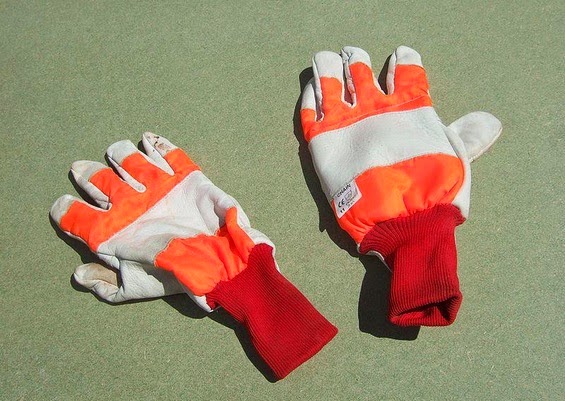
Figure 22: “Chainsaw gloves. Note that only the back of the left hand glove contains chainsaw protective fabric, and so only that glove carries the chainsaw label.”
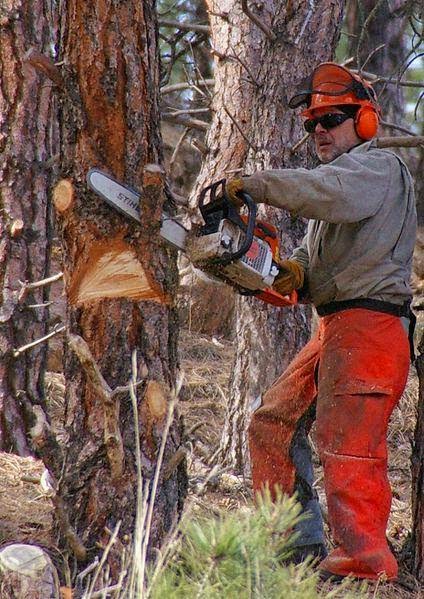
Figure 23: “A man cutting while wearing helmet, goggles, ear defenders, gloves, chaps, and boots”
Environment Suit:
An environmental suit is a suit designed specifically for a particular environment, usually one otherwise hostile to humans. An environment suit is typically a one-piece garment, and many types also feature a helmet or other covering for the head. Where the surrounding environment is especially dangerous the suit is completely sealed.

The first environmental suits were diving suits designed to protect a diver from the surrounding water (see timeline of underwater technology). Later developments were designed to protect the wearer from the cold (for example wetsuits and other ambient pressure suits) or from undersea high pressure and the resulting decompression sickness (for example atmospheric diving suits). Protecting the wearer from cold is also a feature of ski suits.

Figure 24: “Red Bull revealing its next generation Environment Suit”
Extreme Environmental Clothing:
Extreme environment clothing normally refers to clothing for Arctic or mountainous areas on land, although it is sometimes used for survival suits worn by mariners. The basic approach is to insulate one’s body from heat loss, and keep liquid water or ice out of the insulation.
Figure 25: “Extended Cold Weather Clothing System Developed for US Armed Forces”
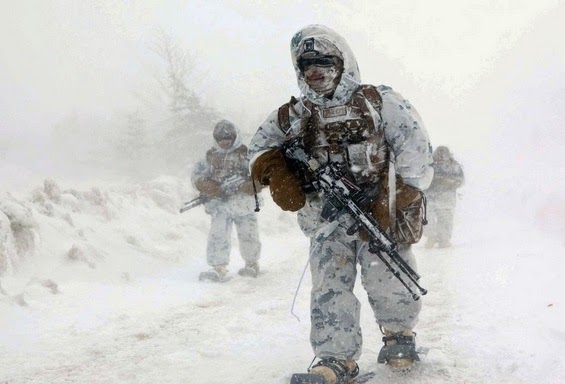
Figure 26: “US Marines conducting extreme cold weather training”
1 2 3 4 5 6 7 8 9 10

Saturday, 10 May 2014

Types of Preventive Clothing and Their Uses or Applications Part-2

….Previous Part

Positive Pressure Personnel Suits (PPPS):
Positive pressure personnel suits (PPPS) or positive pressure protective suits, informally known as “space suits”, “moon suits”, “blue suits”, etc. — are highly specialized, totally encapsulating, industrial protection garments worn only within special biocontainment or maximum containment or biosafety level 4 (BSL-4) laboratory facilities [The most dangerous threat level]. These facilities research dangerous pathogens which are highly infectious and may have no treatments or vaccines available. They also feature other special equipment and procedures such as airlock entry, quick-drench disinfectant showers, special waste disposal systems, and shower exits.
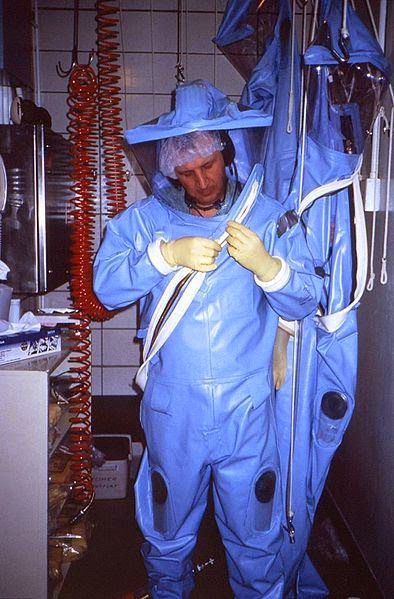
Figure 8: “A laboratorian wearing an older-model PPPS before entering a Maximum Containment lab or “suit lab”
Figure 9: “A BSL-4 laboratorian working in an ILC Dover Chemturion “Blue Suit”
Figure 10: “Researcher at US Centers for Disease Control, Atlanta, Georgia, working with influenza virus under biosafety level 3 conditions, with respirator inside a biosafety cabinet (BSC)”
Hazmat (Hazardous materials or Dangerous goods) Protection Suit:
Hazmat or Hazardous Materials or Dangerous Goods:
Dangerous goods are solids, liquids, or gases that can harm people, other living organisms, property, or the environment. They are often subject to chemical regulations. In the United States and sometimes in Canada, dangerous goods are more commonly known as hazardous materials, (abbreviated as HAZMAT or HazMat). “HazMat teams” are personnel specially trained to handle dangerous goods. Dangerous goods include materials that are radioactive, flammable, explosive, corrosive, oxidizing, asphyxiating, biohazardous, toxic, pathogenic, or allergenic. Also included are physical conditions such as compressed gases and liquids or hot materials, including all goods containing such materials or chemicals, or may have other characteristics that render them hazardous in specific circumstances.

Hazmat Suit:
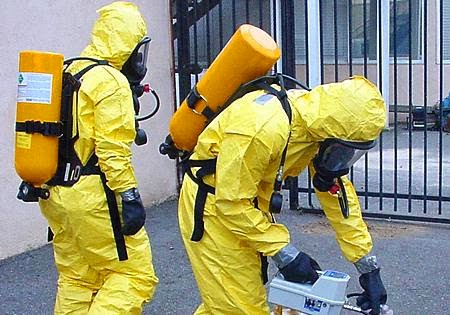
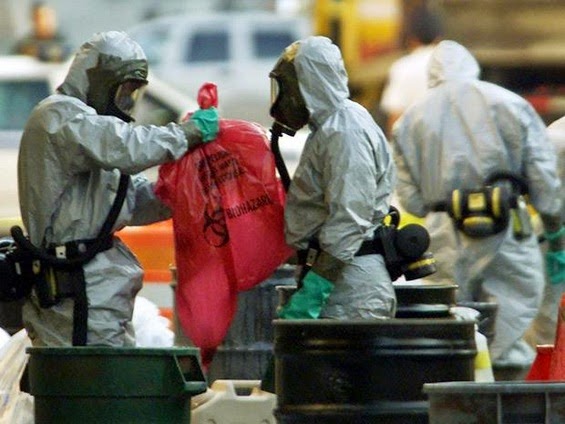
A hazmat suit (hazardous materials suit) is a piece of personal protective equipment that consists of an impermeable whole-body garment worn as protection against hazardous materials. Such suits are often combined with self-contained breathing apparatus (SCBA) to ensure a supply of breathable air. Hazmat suits are mostly used by firefighters, researchers, personnel responding to toxic spills, specialists cleaning up contaminated facilities and workers in toxic environments.
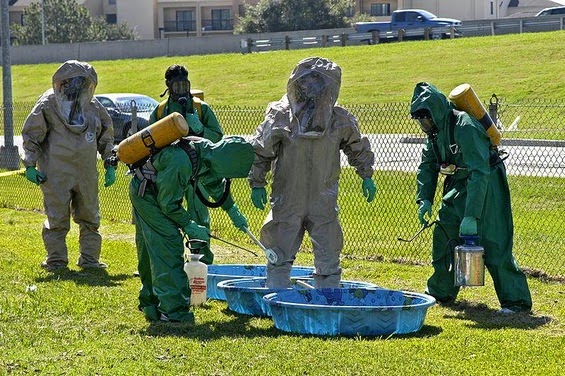
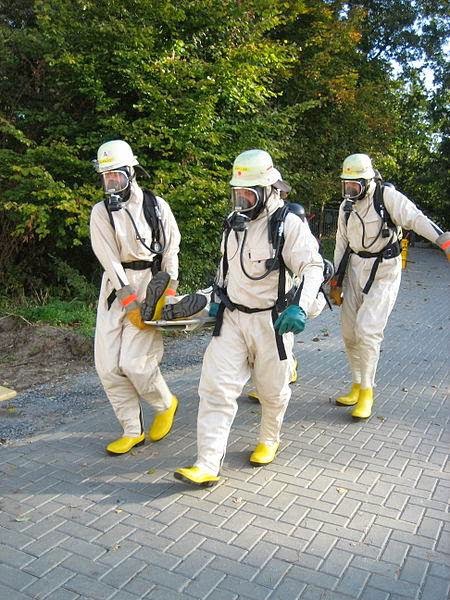
Figure 11: “An Emergency Medical Technician team training as rescue (grey suits) and decontamination (green suits) respondents to hazardous material and toxic contamination situations”
Figure 12: “Hazmat Suit being used during some Detection Process”
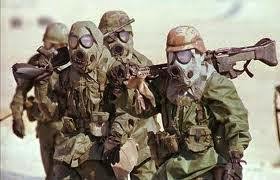
Figure 13: “Military grade Hazmat Suits used by US Army during Gulf-War 1990-91”
Figure 14: “Hazmat Suits being used by Police Officials of New York Police Department during Crisis Management Drill”
Figure 15: “Drug Enforcement Administration agents wearing Level B hazmat suits.”
Figure 16: “Rescue Team wearing Hazmat Suits with self contained breathing apparatus or SCBA”
Bomb Disposal Suit:
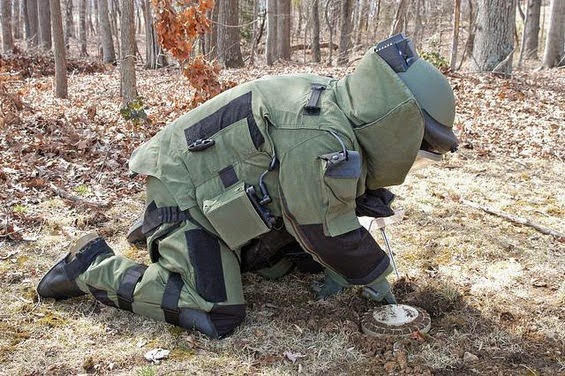
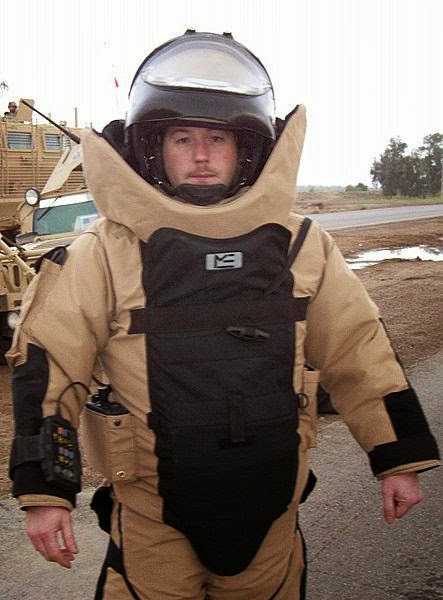
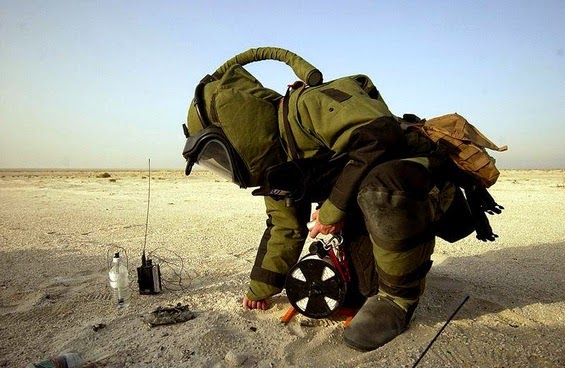
A bomb suit or a blast suit is a heavy suit of body armor designed to withstand the pressure generated by a bomb and any fragments the bomb may produce. It is usually worn by trained personnel attempting bomb disposal. In contrast to ballistic body armors, which usually focus on protecting the torso and head, a bomb suit must protect all parts of the body, since the dangers posed by a bomb’s explosion affect the entire body.

Parts of the bomb suit overlap for maximum protection. The suit protects in several different ways. It deflects or stops projectiles that may come from an exploded device. It also stops or greatly decreases the pressure of the blast wave being transmitted to the person inside of the suit. Most bomb suits, such as the Advanced Bomb Suit use layers of Kevlar, foam, and plastic to accomplish these things.

In order to maximize precision, bomb suits lack gloves. This gives the wearer’s hands maximum mobility, but leave their hands and forearms completely unprotected.
Figure 17: “A Bomb Disposal Squad Officer mobilizing while wearing a Bomb Suit”
Figure 18: “A Bomb Disposal Squad Officer performing his duty”
Figure 19: “Bomb Suit used by US Army operating in Deserts”
Figure 20: “Bomb Squad Officer under training in a Desert Scenraio”
Figure 21: “Bomb Suit used in Urban Warfare”


1 2 3 4 5 6 7 8 9 10

Types of Preventive Clothing and Their Uses or Applications Part-1

Types of Preventive Clothing and Their Uses or Applications

Bilal Rashid
Dept. of Garment Manufacturing
National Textile University, Faisalabad, Pakistan
Email: br.dmc.gcuf@gmail.com


CLOTHING:
Clothing is a word that can be substituted with “Garment” or “Apparel”. Clothing is fiber and textile material worn on the body. The wearing of clothing is mostly restricted to human beings and is a feature of nearly all human societies. The amount and type of clothing worn is dependent on physical stature, gender, as well as social and geographic considerations.

Physically, clothing serves many purposes:
  1. It can serve as protection from various elements;
  2. It can enhance safety during hazardous activities such as hiking and cooking;
  3. It protects the wearer from rough surfaces, rash-causing plants, insect bites, splinters, thorns and prickles by providing a barrier between the skin and the environment.
  4. It can insulate against cold or hot conditions;
  5. It can provide a hygienic barrier, keeping infectious and toxic materials away from the body; and
  6. It also provides protection from harmful UV radiation.
Clothes can be made out of fiber plants such as cotton, plastics such as polyester, or animal skin and hair such as wool. Humans began wearing clothes roughly 83,000 to 170,000 years ago.
Figure 1: “A baby wearing many items of winter clothing: headband, cap, fur-lined coat, shawl and sweater”
PROTECTIVE CLOTHING:
There are different types of Protective or Preventive Clothing being used now-a-days such as:
  1. Biohazard (Biological Hazards) Survival Suit;
  2. Positive Pressure Personnel Suits (PPPS);
  3. Hazmat (Hazardous materials or Dangerous goods) Protection Suit;
  4. Bomb Disposal Suit;
  5. Chainsaw Safety Clothing;
  6. Environment Suit;
  7. Extreme Environmental Clothing;
  8. Flame Resistant Environmental Ensemble (FREE);
  9. Flame Resistant Organizational Gear (FROG);
  10. Army Combat Shirt;
  11. High-visibility (HV) Clothing;
  12. Anti-Static Clothing;
  13. Industrial Workwear;
  14. Lifejacket (Personal Flotation Device);
  15. Motorcycle Personal Protective Clothing;
  16. NBC (Nuclear, Biological and Chemical) Suit;
  17. Clean room Suit;
  18. Arc Flash and Shock Hazard Protection Clothing;
  19. Racing (Race Car Driver’s) Suit;
  20. Flight Suit;
  21. G-Suit (Anti-g-Suit);
  22. Jumpsuit;
  23. Boiler suit;
  24. Siren Suit;
  25. Ski Suit;
  26. Pressure Suit;
  27. Space Suit;
  28. Wetsuit;
  29. Dry suit;
  30. Aprons;
  31. Mittens;
  32. Bulletproof Vest;
  33. Flak Jacket;
  34. Fire Proximity Suit;
  35. Bunker Gear (Turnout Gear).
Biohazard (Biological Hazards) Survival Suit:
Biological Hazard:
Biological hazards, also known as biohazards, refer to biological substances that pose a threat to the health of living organisms, primarily that of humans. This can include medical waste or samples of a microorganism, virus or toxin (from a biological source) that can affect human health. It can also include substances harmful to animals.

The term and its associated symbol are generally used as a warning, so that those potentially exposed to the substances will know to take precautions. The biohazard symbol was developed in 1966 by Charles Baldwin, an environmental-health engineer working for the Dow Chemical Company on the containment products.

It is used in the labeling of biological materials that carry a significant health risk, including viral samples and used hypodermic needles.
Figure 2: “The international symbol for biological hazard”
Bio-safety Level:
A biosafety level is the level of the biocontainment precautions required to isolate dangerous biological agents in an enclosed facility. The levels of containment range from the lowest biosafety level 1 (BSL-1) to the highest at level 4 (BSL-4). In the United States, the Centers for Disease Control and Prevention (CDC) have specified these levels.

Biocontainment:
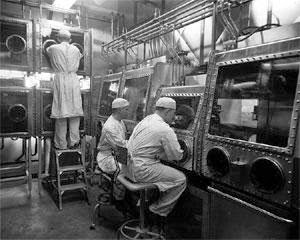
The concept of biocontainment is related to laboratory biosafety and pertains to microbiology laboratories in which the physical containment of highly pathogenic organisms or agents (bacteria, viruses, and toxins) is required, usually by isolation in environmentally and biologically secure cabinets or rooms, to prevent accidental infection of workers or release into the surrounding community during scientific research. The term “biocontainment” was coined in 1985, but the concept stretches back at least to the 1940s.
Figure 3: “Researchers working in Class III cabinets at the U.S. Army Biological Warfare Laboratories, Camp Detrick, Maryland (1940s). Biocontainment procedures were pioneered at the USBWL in the 1940s and ’50s.”
Biohazard Survival Suit:
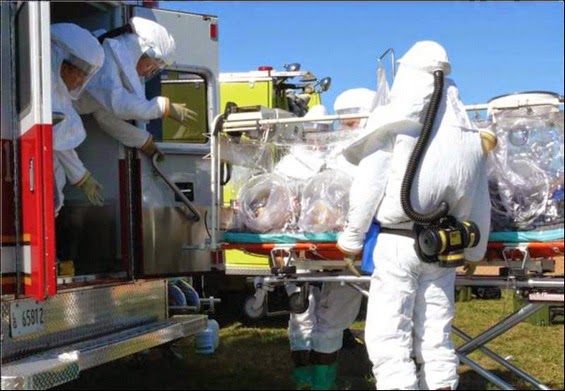
Figure 4: “The Aeromedical Isolation Team (AIT) of the U.S. Army operated mobile biocontainment equipment designed for patient care and transport from 1978 to 2010. (Photo by Bruce Maston, 2007)”
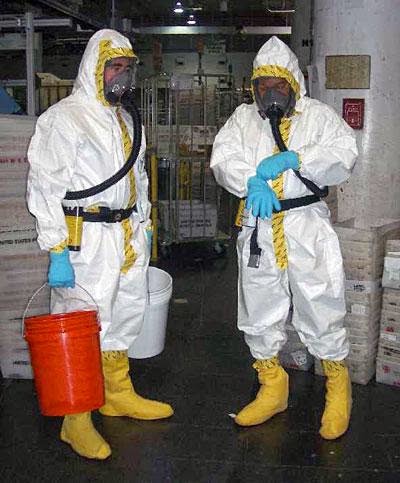
Figure 5: “Biohazard Survival Suits worn during disposal of biohazard material”
Figure 6: “Biohazard suit in use while carrying out duties inside a high-level biocontainment military grade laboratory”
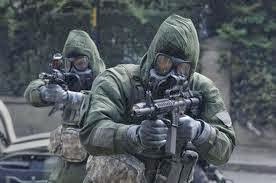
Figure 7: “Special Services Unit Soldiers wearing Battlefield standard Biohazard Survival Suits to reduce the risks in case of Biological Warfare Tactics Employment”

1 2 3 4 5 6 7 8 9 10


Thursday, 8 May 2014

Combing Process | Types of Comber

Combing Process
Bhavesh B. Mavani
Gujarat Technological University Gujarat,India
E-mail : mavanibb9025@gmail.com


THE COMBING PROCESS:
The combing process is normally used to produce smoother, finer, stronger and more uniform yarns. Therefore, combing is commonly confined to high grade, long staple natural fibers. In recent years, combing has been utilized for upgrading the quality of medium staple fibers. In addition, a yarn made of combed cotton needs less twist than a carded yarn. However, these quality improvements are obtained at the cost of additional expenditure on machines, floor-space and personnel, together with a loss of raw material. Yarn production coast is increased by something under 1 US$/Kg of yarn (depending on the intensity of combing).
 
To improve the yarn quality, the comber must perform the following operations:
  1. Elimination of precisely pre-determined quantity of short fibers;
  2. Elimination of the remaining impurities;
  3. Elimination of a large proportion (not all) of the neps in the fiber material;
  4. Formation of a sliver having maximum possible evenness;
  5. Producing of more straight and parallel fibers.
Elimination of short fibers produces an improvement mainly in staple length, but also affects the fineness of the raw material. The micronaire value of combed sliver is slightly higher than that of feedstock (elimination of dead fibers). Also the degree of parallelization might reduce the inter-fiber adhesion in the sliver to such an extent that fibers slide apart while being pulled out of the can – i.e. sliver breaks or false drafts might be caused.

Types of Comber:
The major types of combers include:-
  1. Rectilinear comber (with stationary or oscillating nippers),
  2. Circular combers (English worsted process),
  3. Rotary comber (production of Schappe spun yarns) and
  4. Hackling machines (bast fibers).
The Combing Machine:-
The basic elements of the combing machine are shown in figure. These are the feeding element, the nipper plate, the combing system and the detaching rollers. The feeding element consists of a feed plate and feed roll. The main function of the feeding element is to feed the comber lap in a series of short lengths. The nipper plate grips the fibers as a means of holding long fibers while the short fibers, neps, and trash are being removed. The combing system consists of two combs. The first one is a rotating bottom circular comb that performs the main combing action. The second one is a linear top comb that completes the function of the bottom comb through vertical combing movement.
Basic elements of the combing machine
The detaching rolls are two pairs of gripping rolls that rotate forward and backward in intermittent fashion to hold and move the combed web for a net forward travel.

The objectives of combing mentioned earlier are accomplished by a precise sequence and synchronized series of actions performed by the combing elements. The following text will review this sequence of actions, or the combing cycle, in a very simplified manner to demonstrate the function of each comber component.

Wednesday, 7 May 2014

An Overview of Flat- Part of Carding Machine

An Overview of Flat- Element of Carding Machine
Bhavdip Paldiya
Dept. of Textile Technology
Sarvajanik College of Engineering & Technology, Surat, India
Cell: +91 9662020909
Email: bhavdipk9009@gmail.com


FLATS
Together with the cylinder (Fig.), the flats form the main carding zone. Here, the following effects should be achieved:
  1. Opening of tufts into individual fibers;
  2. Elimination of remaining impurities;
  3. Elimination of some of the short fibers;
  4. Untangling neps (possibly their elimination); dust removal
  5. High degree of longitudinal orientation of the fibers.
Flat in carding
Construction of the Flats
The bars of the flats are made of cast iron and are somewhat longer than the operating width of the card, since they rest on adjustable (so-called flexible) bends to the left and right of the main cylinder and must slide on these guide surfaces. Each bar is approximately 32 - 35 mm wide (might change to smaller widths). The bars are given a ribbed form (T-shape) in order to prevent longitudinal bending. A clothing strip (108 b) of the same width is stretched over each bar and secured by clamping, using clips (c) pushed onto the left- and right-hand sides of the assembly. Since some space is taken up by the upper edge of each clip, only a strip about 22 mm wide remains for the clothing (hooks or teeth). For this reason, the flats do not enable an absolutely continuous carding surface to be formed above the cylinder; there are gaps between the clothing strips.

The flats as used on the flat type carding machine designed for processing cotton and fibres of similar staple length to cotton may be fixed in relation to the carding cylinder or part of a chain of revolving flats which move around part of the circumference of the carding cylinder.

Types of Flat:
Flat are two types….
  1. Revolving flat
  2. Stationary flat
Revolving flat
Conventionally, the revolving flat is T-shaped and made of cast-iron, machined to accept a top of card-clothing attached to its flange by steel clips, each end of the flat being machined for correct location of the flat in close proximity to the carding cylinder, against which the card-clothing top has to operate. The rib of the flat is designed to provide the necessary stiffness to enable the flat to span the width of the carding machine and ensure that an equal setting of the card-clothing on the flat to that on the carding cylinder is sustainable over the working width of the cylinder.

Stationary flats
Stationary flats can be used in addition to revolving flats or can be entirely substituted for revolving flats, such stationary flats being conventionally also T-shaped in the form of an iron casting or an aluminium extrusion. The flange carries a card-clothing top or other operative element such as a trash extracting knife which is clipped or attached by screws to the surface of the flat, and the rib is designed to support the flat correctly across the width of the carding cylinder. The ends of the flat are machined to accept the setting and securing arrangements for fixing the flat to the carding machine frame in its required relationship to the carding cylinder.

With both stationary and revolving flats, when the card- clothing top or other operative element becomes worn out or damaged, it is removed from the flat and a new top or other element is clipped or screwed to the flat in replacement. Replacement of the card-clothing top which is conventionally clipped or bonded to the revolving flat involves the use of specialised machinery which adds to the cost of the replacement. Replacement of the top which is screwed to the flat requires investment in the specially designed flat adapted to receive a screw-on type of top.

Movement of the flats
The bars of the flats mesh individually, like an internally toothed wheel, with the recesses in a sprocket gear, and are carried along by rotation of the sprocket. The ends of the bars of the operative flats slide over a continuous bend – with metal-to-metal friction.

As the flats move at a very low speed compared with that of the cylinder in principle, the flats can be moved forward or backward, i.e. in the same direction as or in opposition to the cylinder.

If the flats move with the cylinder (forward), the cylinder assists in driving the flats and the removal of strippings is easier. Forward movement therefore gives design advantages. On the other hand, reverse movement (against the cylinder) brings technological advantages. In this system, the flats come into operative relationship with the cylinder clothing on the doffer side. At this stage, the flats are in a clean condition.

They then move toward the licker-in and fill up during this movement. Part of their receiving capacity is thus lost, but sufficient remains for elimination of dirt, since this step takes place where the material first enters the flats.

At that position, above the licker-in, the cylinder carries the material to be cleaned into the flats. The latter take up the dirt but do not transport it through the whole machine as in the forward movement system; instead, the dirt is immediately removed from the machine (directly at the point where the flats leave the machine).

Tuesday, 6 May 2014

Fibers Used for Medical and Health Care Application

Fibers Used for Medical and Health Care Application
Authors: Taha Bin Yahya
Maaz Wasim Khan
Akram Ali
National Textile University, Faisalabad, Pakistan
Email: tahabinyahya@gmail.com


Fibers for Medical & Health Care:

Textiles materials that are used in medical applications include fibers, yarns, fabrics and composites. Depending upon the application, the major requirements of medical textiles are absorbency, tenacity, flexibility, softness and at times bio-stability or bio-degradability.
Fibers Used for Medical and Health Care Application
Fibers used in medical field may vary from natural fiber such as cotton, silk, regenerated wood fluff (absorbent layer), to, manmade fibers like polyester, polyamide, polyethylene, glass fiber etc.

The various applications of different fiber in medical field are shown as follows:
Sr No.
Fibre
Application in medical field
1
Cotton
Surgical clothing gowns, Beddings, Sheets, Pillow cover, Uniforms, Surgical hosiery
2
Viscose
Caps, Masks, Wipes
3
Polyester
Gowns, Masks, Surgical cover drapes, Blankets, Coverstock
4
Polyamide
Surgical hosiery
5
Polypropylene
Protective clothing
6
Polyethylene
Surgical covers, Drapes
7
Glass
Caps mask
8
Elastomeric
Surgical hosiery


Current Issues
A number of crucial issues regarding medical products in general and healthcare and hygiene products in particular have been identified and debated amongst clinicians, environmentalist, drug companies etc. for a long time. The issues such as
  • Natural against chemical or manufactured fibers
  • Disposable against reusable or durable fabrics
  • Antibacterial or antimicrobial fibers against finishes or coatings for infection control
  • Methods of disposal of clinical waste i.e. landfills against incineration and other forms of medical and clinical waste disposal
There is general move towards an increased use of natural polymers that are biocompatible, biodegradable and nontoxic.

Monday, 5 May 2014

An Overview of Autoleveller in Drawframe

An Overview of Autoleveller in Draw Frame
Bhavdip Paldiya
Dept. of Textile Technology
Gujarat Technological University, Gujarat, India
Email: bhavdipk9009@gmail.com


Auto leveller:
Alternative name for autolevelling include autoregulator, draft , leveller. Although these different names are used by different machinery manufacturers, the basic principle remains the same.

Rieter card leveling operates as medium-term to long-term leveling (closed-loop, produced by a proportionalintegral regulator) and is performed by a microprocessor. In the feed of the card the feed measuring device records the fluctuations in the cross-section of the batt feed. The speed of the feed roller of the card is changed electronically so that these fluctuations in the cross-section are leveled out. The chute is also included in the control loop.
Autoleveller in Drawframe
However, the filling level is not used for regulating the feed rollers in the chute but is considered as an additional control parameter. In the delivery of the card a pair of disc rollers scan the cross-section of the carded sliver as it emerges. These readings are compared electronically with the preselected set value. Deviations in the set value are corrected electronically by altering the speed of the feed roller in the card

Object of Auto leveling:
The object of an autoleveller is to measure the sliver thickness variations & then continuously to after the draft accordingly so that more draft is applied to thick places & less to thin places with the result that the sliver delivered is less irregular than it, otherwise would have been. Besides an improvement in production appearance, autolevelling can also contribute to better productive efficiency, fewer end-breakages in subsequent process, less waste & constant process conditions.

Autoleveller may classified into two main groups according to the basic principle of operation –

i) Open loop Autoleveller:
The open loop control principle, which can be used for the correction of fairly short term variations, where the solid lines indicate the flow of fibres through the m/c & the broken lines represent to flow of information in the autoleveller unit. The control unit compares the measurement signal with the reference signal which in this case represents the mean output reqd. The control unit accordingly increases, leaves unaltered, or decreases the output of the regulatory which in turn provides a variable speed to the back of front rollers of the process to give the reqd draft when the measured mtl has reached the point at which draft is applied. The magnitude & direction of each change in draft is determined by the magnitude of the change of count previously indicated by the measuring unit. Most of the drawframe autolevellers are open loop auto levellers.

If the direction of the arrows in (a) is followed from any starting point, it always leads out into the open from the diagram at the place marked mtl by the control unit. Measurement always takes place on the mtl prior to the mtl. Thus if measurement is made on the input mtl, the correction may be applied to either the back rollers or the front rollers.

ii) Closed loop Autoleveller:
The closed loop principle is illustrated in (b); this system is used for the correction of long term & medium term variations. Again the measurement signal is compared with the reference signal by the control unit which then determines the output of the regulator which provides the variable speed to the process to give the reqd draft.

However, if the direction of the arrows in (b), is following from any starting point except the delivery, is always leads to a never-ending circuit of the loop which links the process & the control unit together, hence the name closed loop; measurement always takes place on the mtl after the point where corrective action is applied. Thus if measurement is made on the output, the correction may be applied to either the back rollers or the front rollers.

It is immediately apparent that the control unit contunually cheeks the results of its own actions because measurement is taken from the product of the process. This may be regarded as a basic advantage of the closed loop system, but it is obtained at the price of increased complexity.

Because the flow of fibres in the process forms part of the control loop, this means that the amount of control which can be applied is restricted not only by the limitations of the control unit itself, but the characteristics of the process.

A closed loop system must be designed so as to avoid hunting, i.e. an unwanted oscillation in the output, in this case sliver thickness.

Advantages of Autolevelling:
  1. All variations are corrected.
  2. Count c.v.% will be consistent & good, hence the yarn will be suitable for knitting.
  3. Thin places in the sliver, hence in the yarn quality will be low.
  4. Ring frame breaks will come down, hence pneumfil waste will be low.
  5. Fluff in the department will be less, therefore uster cuts will be less.
  6. Fabric quality will be good because of lower number of fluff in the yarn.
  7. Labour productivity will be more.
  8. Machine productivity will be more.
  9. Idle spindles will be less.
  10. RKM c.v.% will be low, because of low number of thin places.
  11. Workability in warping & weaving will be good, because of less no. of thin places & lower end breaks in spgn & winding.
  12. Low sliver U%, hence yarn U% will be good.
  13. Production will be more accurate in autoleveller draw frame compared to non autoleveller draw frame.
  14. Variation in Blend percentage will be very less, if both the components are autolevelled before blending, hence fabric appearance after dyeing will be excellent.